
How Long Do Major Appliances Really Last? A Lifespan Guide
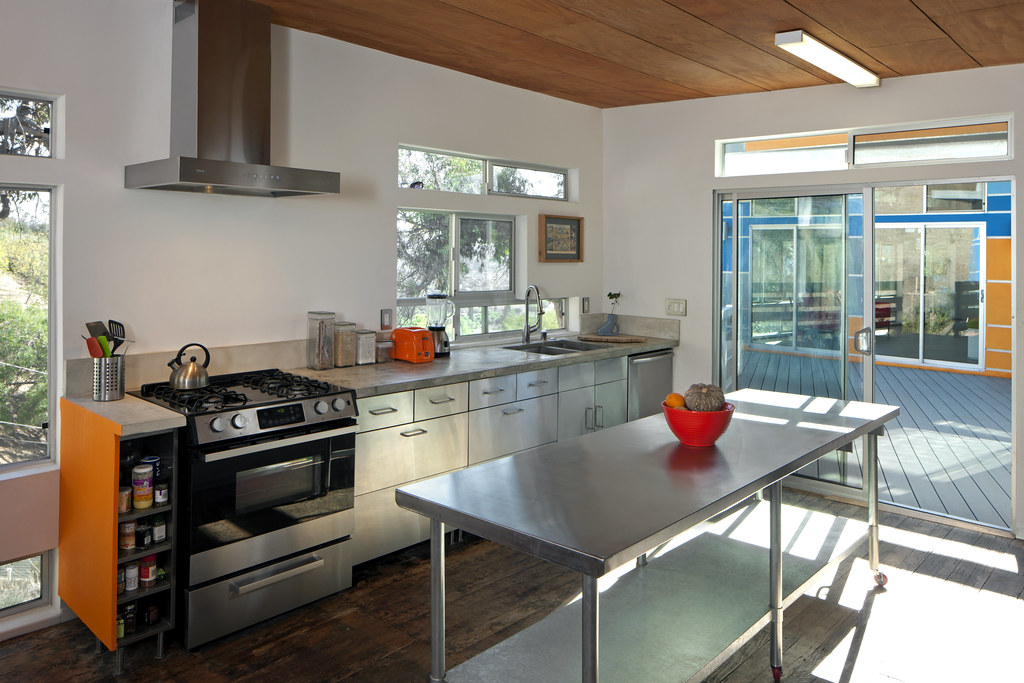
Photo: “Manna House” by Jeremy Levine Design, CC BY 2.0
Key Takeaways
- Most major appliances last 10–15 years with reasonable care
- Refrigerators and dryers tend to last longest (13–17 years)
- Dishwashers and garbage disposals have the shortest typical lifespan
- Regular maintenance can push an appliance toward the higher end of its range
When an appliance breaks, the first question is usually “is this normal for its age, or did something go wrong early?” Here’s what the typical lifespan actually looks like by appliance type.
Typical lifespan by appliance
| Appliance | Typical lifespan | What shortens it |
|---|---|---|
| Refrigerator | 13–17 years | Poor ventilation, dirty condenser coils |
| Washing machine | 10–13 years | Overloading, hard water mineral buildup |
| Dryer | 13–15 years | Clogged vents, restricted airflow |
| Dishwasher | 9–12 years | Hard water, skipping filter cleaning |
| Oven/range | 13–16 years | Self-clean cycle overuse (electric), heavy use |
| Garbage disposal | 8–12 years | Grinding hard items (bones, fibrous produce) |
Why some appliances last longer than others in your own home
Usage intensity matters more than most people expect. A refrigerator in a 2-person household runs under far less strain than one in a busy family kitchen with the door opening dozens of times a day. Water quality matters too — homes on hard water see meaningfully shorter dishwasher and washing machine lifespans due to mineral scale buildup on internal components.
Signs an appliance is nearing the end, not just having a bad week
- Repairs are becoming more frequent (more than one major repair in 12-18 months)
- The specific failing part is tied to the sealed system or compressor (refrigerators) or the control board (most appliances) — these tend to be the more expensive, harder-to-justify repairs later in life
- Energy bills have crept up noticeably without a clear other explanation
- Replacement parts are becoming difficult to source for the model
Does regular maintenance actually extend lifespan?
Yes, meaningfully. Cleaning refrigerator condenser coils twice a year, cleaning the dishwasher filter monthly, and clearing dryer vents annually are the three highest-impact habits for stretching an appliance’s realistic lifespan toward the higher end of its range rather than the lower end.
Not sure whether your specific appliance is worth repairing at its current age? See our repair vs. replace guide for the actual math, or browse our services for a same-day diagnosis.
Frequently Asked Questions
Do more expensive appliances last longer?
Not necessarily — build quality varies more by specific model and brand reliability ratings than by price point alone. Some mid-range models outlast premium ones with fewer complex electronic features to fail.
Does it matter if I bought a floor model or open-box appliance?
Not for lifespan specifically, as long as it wasn’t damaged in handling — the internal components are identical to a new-in-box unit.
Is it true appliances don’t last as long as they used to?
There’s some truth to this for certain categories — added electronic features and smart-home connectivity have introduced more potential failure points than older, simpler mechanical designs, though efficiency has generally improved.
Need a technician instead of a guess?
Same-day appointments across Harrisburg, Dauphin & Cumberland counties.